
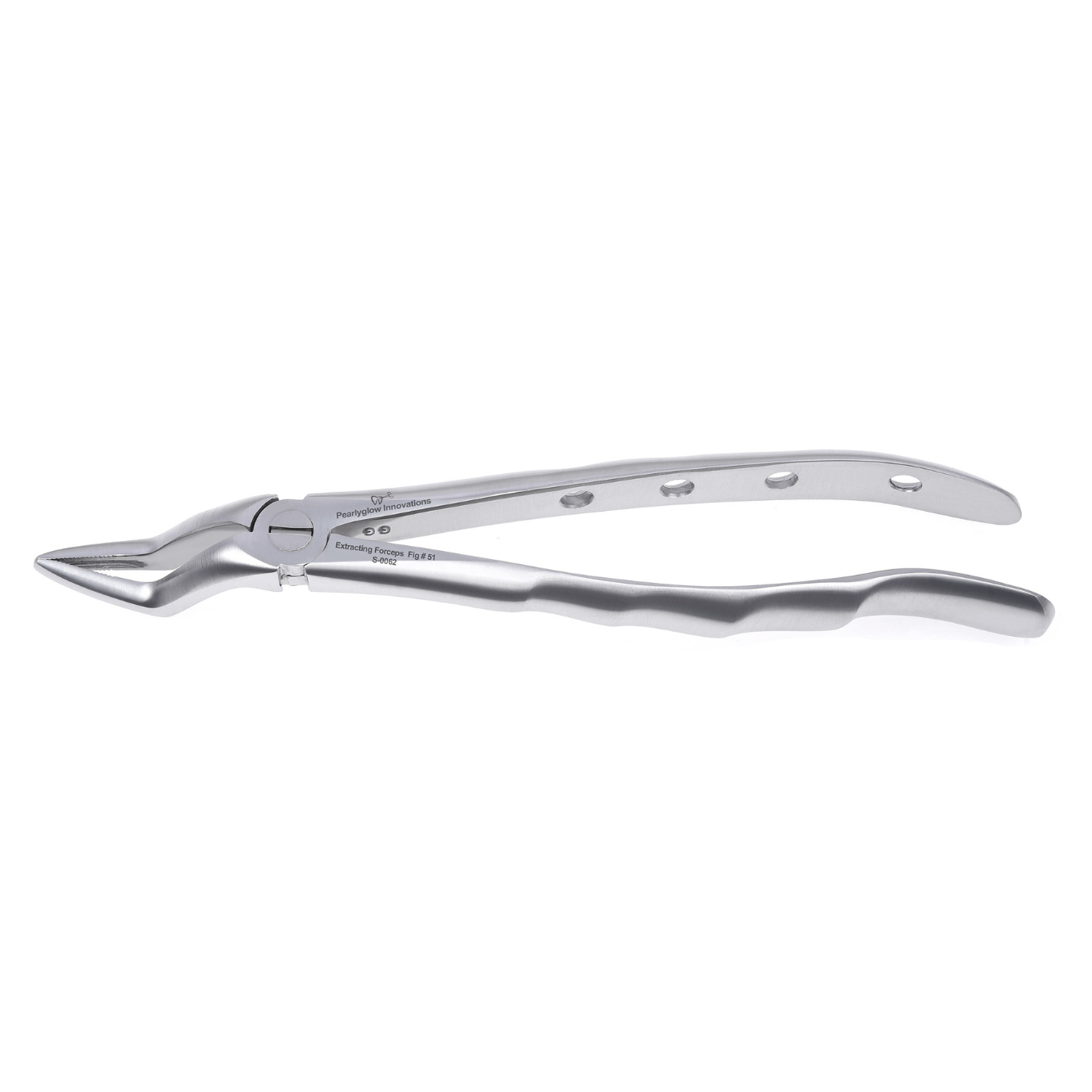
Extraction Forceps Buying Guide: How Dentists Should Choose Forceps for Grip, Beak Fit, and Control
Extraction Forceps Buying Guide: How Dentists Should Choose Forceps for Grip, Beak Fit, and Control
A dentist usually understands the value of good extraction forceps during the procedure itself. The tooth is mobile, the patient is waiting, access is limited, and the forceps either feels stable in the hand or starts demanding extra pressure.
That difference is not small. It affects the dentist’s grip, wrist comfort, beak control, patient experience, and overall confidence during tooth removal.
Buying extraction forceps should not be treated like buying a simple metal instrument. It is a clinical decision.
Why Extraction Forceps Selection Matters
Extraction forceps are designed to grasp the tooth and deliver controlled movement. In clinical practice, forceps selection affects how well the dentist can adapt to tooth anatomy, control buccolingual movement, maintain wrist stability, and avoid unnecessary pressure.
A good forceps helps the dentist feel the tooth. A poor forceps makes the dentist squeeze harder.
That is why dentists should look carefully at beak shape, hinge movement, handle design, steel quality, finishing, and balance before buying.
Where Dentists Commonly Struggle
Many extraction difficulties are not because the dentist lacks skill. Sometimes the instrument itself makes the procedure harder.
Dentists commonly struggle with forceps slipping, poor beak seating, uncomfortable handles, unstable hinge movement, posterior access difficulty, and fatigue during multiple extractions.
When the forceps does not adapt properly, the dentist compensates by increasing hand pressure. This can make the procedure more tiring and less controlled.
Beak Design Should Match Tooth Anatomy
The beak is the working end of the forceps. It should adapt closely to the crown, cervical area, or root surface depending on the forceps pattern and clinical situation.
A poorly shaped beak can slip, pinch incorrectly, or fail to engage the tooth properly. This reduces control and increases chairside stress.
Before buying, dentists should check whether the beak anatomy is suitable for the tooth type. Upper anterior, premolar, molar, root, cow horn, and third molar forceps all have different clinical purposes.
One forceps pattern should not be used for every extraction.
Handle Grip and Balance Matter More Than They Look
A forceps handle should feel stable without requiring excessive squeezing. If the handle is too slippery, too thin, poorly textured, or badly balanced, the dentist’s hand works harder.
This is especially important in long surgical sessions or multiple extraction cases. Better balance helps reduce unnecessary strain on the wrist, fingers, and forearm.
A good forceps should feel controlled, not heavy and awkward.
Hinge Movement Shows Instrument Quality
The hinge is often ignored during buying, but it is one of the most important parts of extraction forceps.
A smooth hinge allows controlled opening and closing. A loose hinge reduces stability. A stiff hinge interrupts handling. Poor hinge alignment can affect force transfer.
Before selecting forceps, dentists should open and close the instrument several times and check whether the movement feels smooth, firm, and predictable.
Stainless Steel Quality and Autoclavability
Extraction forceps go through repeated sterilization cycles. If the steel quality or finishing is poor, the instrument may show stains, rust marks, stiffness, or surface roughness over time.
Good stainless steel supports strength, corrosion resistance, cleaning, and sterilization durability. It does not mean the instrument requires no care, but it gives better long-term reliability when maintained properly.
Dentists should always prefer autoclavable stainless steel instruments from a supplier who understands clinical use.
Surface Finishing and Cleaning
Surface finishing matters because extraction forceps come in contact with blood, saliva, and debris. Smooth finishing helps cleaning and reduces areas where residue may remain.
Rough finishing, sharp unwanted edges, or poorly polished joints can make maintenance harder. Over time, this affects the clinic’s infection-control workflow.
A clinical instrument must be easy to clean, inspect, sterilize, and store.
What Dentists Should Check Before Buying Extraction Forceps
Check the beak design
Check tooth-specific forceps pattern
Check hinge movement
Check handle grip
Check instrument balance
Check stainless steel quality
Check surface finishing
Check autoclavability
Check rust resistance
Check supplier reliability
Check replacement and support availability
Selection Mistakes to Avoid
Do not buy forceps only because they look polished.
Do not use one pattern for every extraction.
Do not ignore hinge looseness.
Do not continue using worn beaks.
Do not buy only on lowest price.
Do not skip post-sterilization inspection.
Do not ignore dentist hand comfort.
PearlyGlow Clinical Connection
PearlyGlow Innovations Pvt. Ltd. develops, designs, innovates, prototypes, mass-produces, and supplies dental instruments and dental equipment for modern clinical dentistry.
PearlyGlow extraction forceps are developed with attention to grip, control, beak adaptation, balance, stainless steel quality, autoclavability, rust resistance, and dependable chairside performance.
The focus is simple: the instrument should feel practical in the dentist’s hand and reliable during real clinical use.
FAQs
What should dentists check before buying extraction forceps?
Dentists should check beak design, hinge smoothness, handle grip, balance, stainless steel quality, autoclavability, and finishing.
Why does beak design matter in extraction forceps?
Beak design affects how well the forceps adapts to tooth anatomy. Better adaptation supports better control.
Are stainless steel extraction forceps important?
Yes. Good stainless steel supports strength, sterilization durability, corrosion resistance, and long-term clinical reliability.
Can better forceps reduce hand fatigue?
Well-balanced forceps can help reduce unnecessary gripping pressure and support more comfortable handling.
Should dentists use one forceps for all extractions?
No. Different teeth and clinical situations require different forceps patterns.
Explore PearlyGlow’s extraction forceps range to choose instruments developed for better grip, controlled handling, stainless steel reliability, and dependable chairside performance.
A good extraction begins before force is applied. It begins with the right diagnosis, the right movement, and the right instrument in the dentist’s hand.
Better Grip. Better Control. Better Clinical Confidence.