
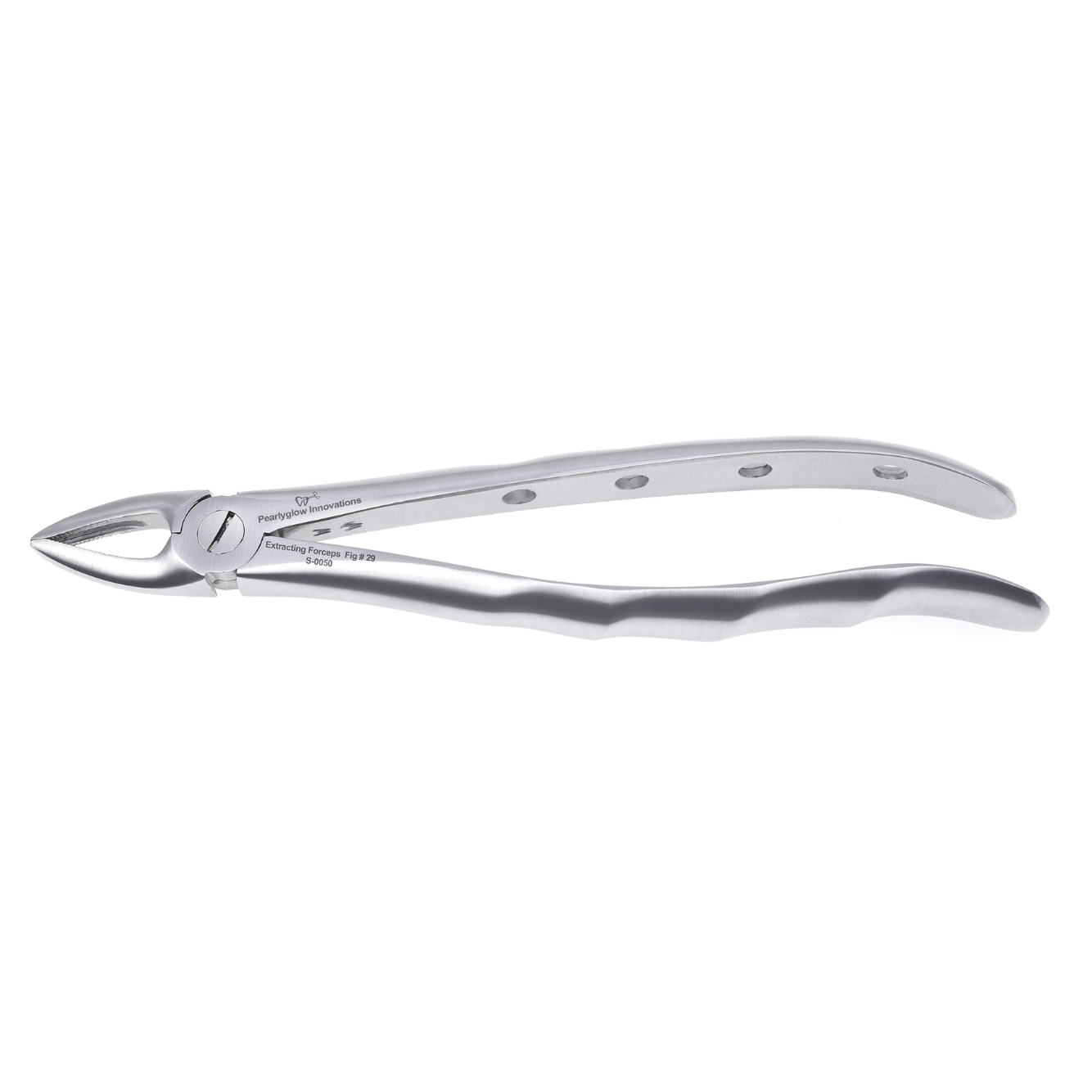
Extraction Forceps: Why Grip, Beak Design, and Balance Matter in Atraumatic Tooth Removal
Extraction Forceps: Grip, Beak Design, and Controlled Tooth Removal
A difficult extraction rarely becomes difficult in one sudden moment. It often begins with small signs: the forceps does not seat properly, the handle needs extra squeezing, the beak does not adapt cleanly, or the dentist feels the need to apply more pressure than expected.
In that moment, the procedure is no longer only about the tooth. It becomes about grip, balance, tactile feedback, and how confidently the instrument allows the dentist to control movement.
Why Instrument Control Matters in Extraction
Extraction forceps are not just instruments for removing teeth. They are instruments for controlled force delivery.
A good extraction depends on how well the beak adapts to the tooth, how stable the handle feels in the hand, how smoothly force is transferred, and how clearly the dentist can sense movement through the instrument.
When forceps are well selected and properly balanced, they can support smoother luxation, controlled socket expansion, and better chairside confidence. When the instrument feels unstable, even a routine extraction can become physically demanding.
Where Dentists Usually Lose Control
Dentists commonly face difficulty when the forceps slips during movement, the beak does not seat properly, the handle feels uncomfortable, or excessive hand pressure is needed to maintain grip.
Posterior extractions can make this more noticeable because access is limited and wrist movement is restricted. In multiple extraction cases, poor instrument balance can also contribute to hand fatigue.
These problems are not always due to the tooth alone. Very often, the design and condition of the forceps affect how confidently the dentist can work.
Instrument Design Factors Behind Difficult Handling
The deeper issue is often related to beak design, hinge stability, handle ergonomics, steel quality, surface finishing, or weight distribution.
A forceps should feel stable in the hand. The beak should adapt to the tooth anatomy, the hinge should move smoothly, and the handle should allow a firm grip without excessive squeezing.
If the dentist has to fight the instrument, chairside control becomes harder.
Effect on Chairside Flow and Patient Comfort
Poor forceps control can increase repeated repositioning, hand fatigue, chairside stress, and treatment time. It may also reduce confidence during difficult cases.
For the patient, uncontrolled pressure can make the procedure feel more uncomfortable. For the dentist, it creates unnecessary physical and mental strain.
A stable instrument allows the dentist to focus on clinical judgment instead of constantly correcting grip and pressure.
What to Check Before Selecting Extraction Forceps
Before choosing extraction forceps, dentists should look beyond appearance and price. The important questions are:
Does the beak adapt well to the tooth anatomy?
Is the hinge movement smooth and stable?
Does the handle provide a confident grip?
Is the instrument balanced in the hand?
Can the stainless steel tolerate repeated sterilization?
Does the surface finishing support cleaning and long-term maintenance?
A good forceps should not encourage the dentist to pull harder. It should support controlled movement when used with proper extraction technique.
How Better Forceps Support Clinical Handling
A well-designed extraction forceps can support better grip, controlled force application, tactile feedback, access, ergonomic comfort, rust resistance, autoclavability, and chairside confidence.
Instrument quality does not replace surgical judgment, case selection, or technique. It supports the dentist’s ability to work with more control.
PearlyGlow Clinical Connection
PearlyGlow Innovations Pvt. Ltd. develops, designs, innovates, prototypes, mass-produces, and supplies dental instruments and dental equipment for modern clinical dentistry.
At PearlyGlow, extraction instruments are developed with attention to grip, control, balance, stainless steel quality, autoclavability, rust resistance, and dependable chairside performance.
The focus is simple: instruments should feel practical in the dentist’s hand and reliable during real clinical use.
Dentist’s Evaluation Checklist
Check forceps beak alignment
Match the forceps pattern to the tooth type
Avoid using one forceps pattern for every case
Test hinge smoothness before use
Check handle grip and comfort
Prefer autoclavable stainless steel instruments
Inspect instruments after sterilization
Avoid excessive pulling force
Use elevators or luxators when clinically indicated
Maintain instruments after every sterilization cycle
Selection Mistakes to Avoid
Using the wrong forceps pattern
Depending only on pulling force
Ignoring loose hinge movement
Buying only on lowest price
Using worn or damaged beaks
Skipping post-sterilization inspection
FAQs
What are extraction forceps used for?
Extraction forceps are used to grasp and remove teeth after adequate loosening, diagnosis, and clinical preparation.
Why do extraction forceps slip?
Forceps may slip because of poor beak adaptation, worn tips, incorrect forceps selection, weak grip design, or poor instrument condition.
Are extraction forceps enough for atraumatic extraction?
No. Atraumatic extraction depends on diagnosis, case selection, luxation, bone support, technique, and correct instrument use.
Why is stainless steel important in extraction forceps?
Good stainless steel supports strength, corrosion resistance, sterilization durability, and long-term clinical reliability.
Can better forceps reduce dentist fatigue?
Well-balanced forceps can help reduce unnecessary gripping pressure and support more ergonomic handling, especially during multiple or difficult extractions.
Explore PearlyGlow’s extraction forceps range to choose instruments developed for better grip, controlled handling, stainless steel reliability, and dependable chairside performance.
Extraction is not about strength alone. It is about judgment, movement, tactile feedback, and instrument control. The right forceps can help the dentist work with more stability, confidence, and clinical comfort.
Better Grip. Better Control. Better Clinical Confidence.